Category: Essays

Campersand Anthology 2023

Submissions for poetry, short prose, comics, art and photography will open later this summer.

The goal: We will put together an anthology of writing and art that is tangentially related to or inspired by the experience of Campersand 2023. It does NOT have to be about camp exactly, but maybe about something you thought of or talked about when you were there. Any kind of connection to your experience is fine. This will AT LEAST exist digitally, but a physical print book may be possible. In the event that happens, any money collected will be donated to the next Campersand scholarship, or a chosen fund (in the even that there is no Campersand).

One piece per person, two page limit.

You retain the rights to your work.

E-mail any questions or offerings to help to Angel at poetryclubafp@gmail.com.

The help needed: I am looking for someone to draw the cover(s), co-editors, perhaps someone with book-formatting experience, and name suggestions.

The Aurelia-inspired art by Victor Carlesi

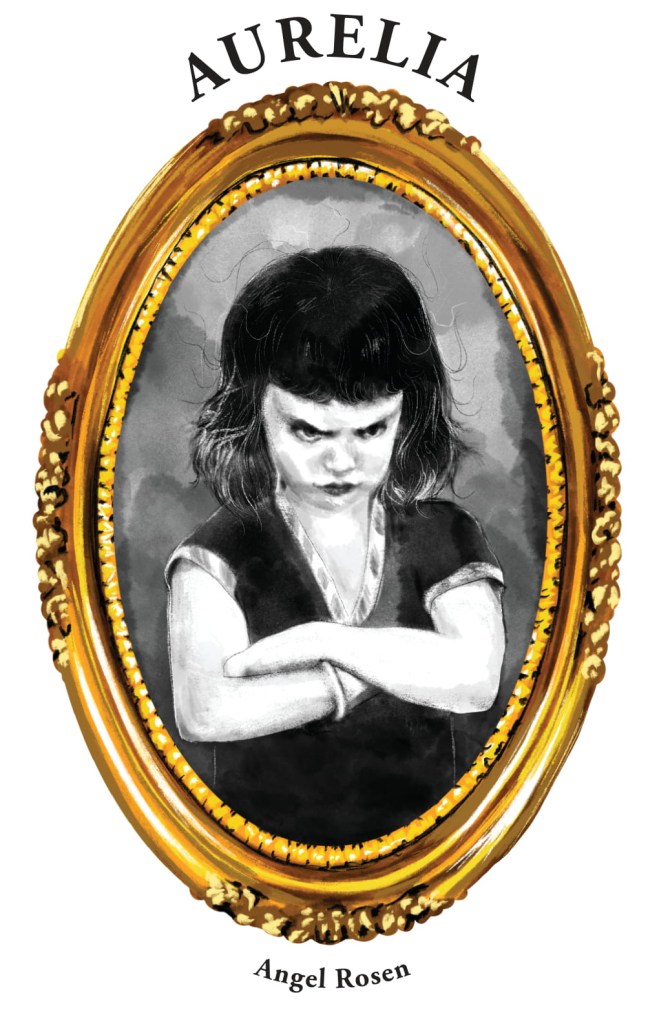
The origin of Aurelia’s name is as follows:

In October of 2019, I went to a memorial dinner with my friend, Victor. Victor is a friend who made me feel comfortable with my art and grief coexisting.

I had been talking about how I needed to eventually pick a name for my upcoming poetry book, but I was stuck between a few choices. Sylvia Plath, my favorite poet, always named things so perfectly and I wanted to really find the right fit. I couldn’t settle for anything less. The conversation lead to me to talking about Sylvia’s mother, Aurelia, whose name means “golden”.

After showing Victor a home video of me from my first day of preschool, age 5, where I make a “mad” face, I thought… “I think I want to name the book Aurelia.”

Looking at the video of me at age five, I know that I was a golden child in a world of people who think silver is more beautiful. There’s more to that story, but that’s the simplest explanation.

This moment of sitting in a grief with my friend and sharing a video from my childhood brought me to have a moment of clarity where it felt that the book named itself, and Victor proceeded to draw little-mad-Angel as the cover of Aurelia.

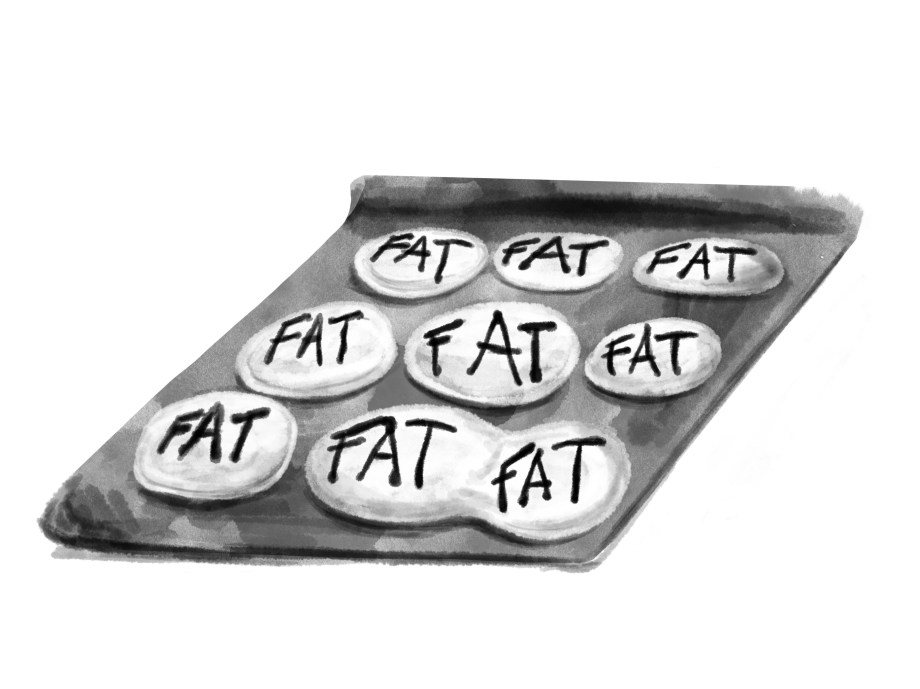
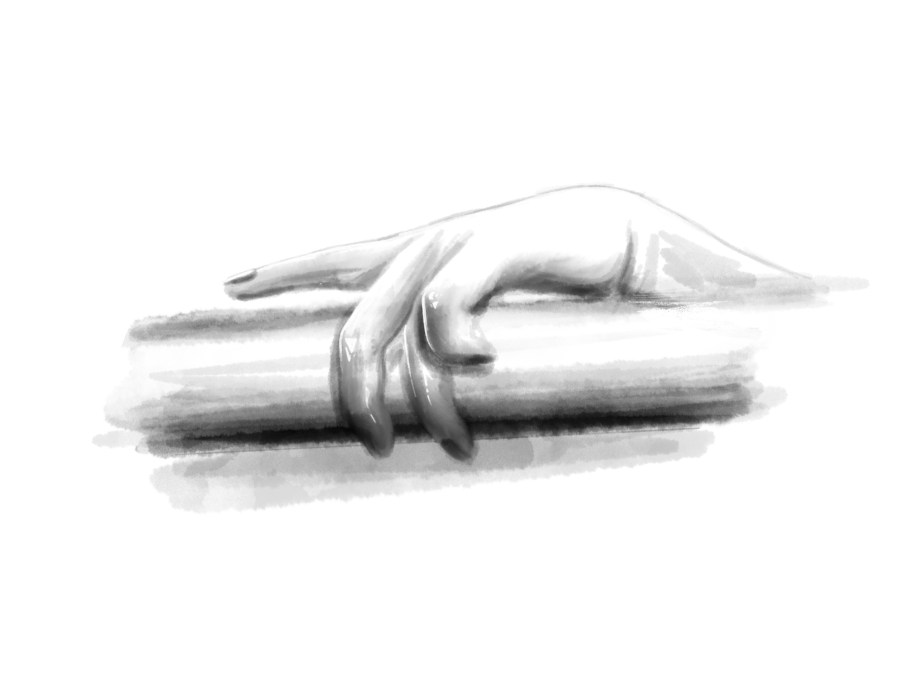
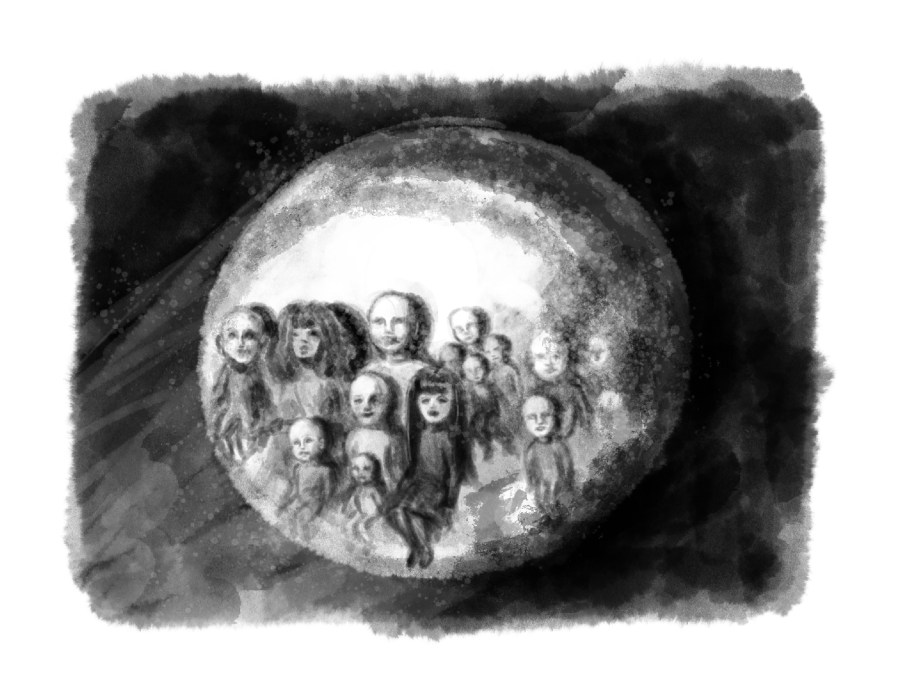
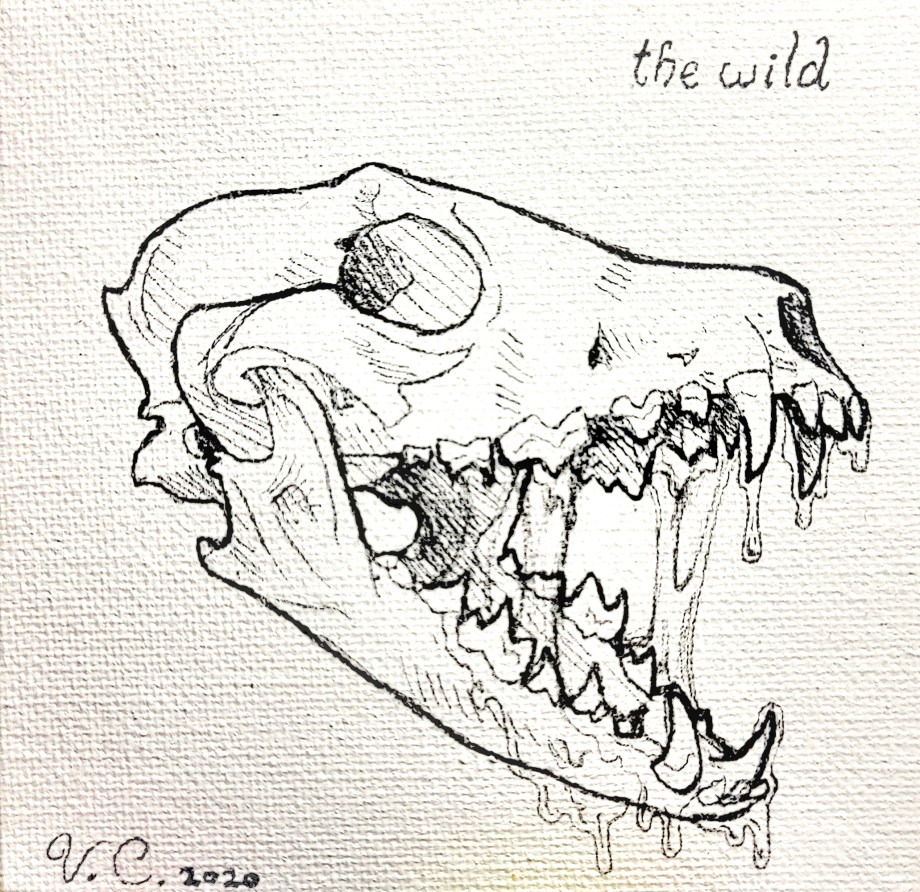
Victor also drew four poem-inspired images for me to have to celebrate the book, and another one as my birthday gift in 2020. So much time has passed since we were sitting together in my room talking about art and poetry, but I will forever be grateful for the time in my life where I just got to sit beside a beloved, golden friend and be artists together and nothing else.

Aurelia (2020)
“Fat Cookies”
“Cherries”
“The Bath”
“Suicide Weather”
“The Doll Collector”
“The Wild”

Art gifted by Victor Carlesi, inspired by poems within Aurelia.

Autism Acceptance 2022

It’s Autism “Awareness” Day.

You are aware autistic people exist. Let’s accept them.


Acceptance ISN’T posting anything about Autism Speaks, puzzle pieces, or the color blue. Acceptance ISN’T sharing the “Blue Halloween Bucket” post every year or talking about how “special” Autistic people are like we’re not reading your comments. We have always been here.

If you have seen a single post about how the autistic community feels about Autism Speaks & you still choose to share and spread information from them, you are NOT an ally. Yes, even if your son, niece, third cousin, best-friend’s child, sibling or father is autistic. If you are not applying the information that autistic people are offering and learning from it, you’re not an ally.

Accepting autism means realizing that we do not always have the support we need in the world, because it doesn’t exist universally. A lot of autistic people are failed by the system and lack of accessibility. We don’t all need the same amount of help, but a lot of us don’t have access to the right kind.

Autism acceptance means accepting that YOU DID bully me (and anyone like me) if you made fun of me for liking Pokémon, Freddy Krueger or cat books, but thought it was perfectly acceptable for someone to like Twilight, sports teams and Disney movies. Accepting our differences is knowing when to hold us to a different standard than neurotypicals, and when not to. If “Regular” people are allowed to be HUGE FANS of conventional movies, teams, and topics, you cannot resent autistic people for their special interests.

Accepting autism is re-learning what the media has taught you. It’s not some curable mental illness… It’s a neurotype. All people process information differently, but autistic people process information more often a certain way than another. We’re not all the same, but we have an overlap in our understanding and how we learn, communicate and articulate our truths.

Accepting autism is realizing that it doesn’t end when someone stops being a kid. Accepting autism is actually making time for adult autistic friends you have, including them in things you like and also wanting to do things they like, even if you think they’re weird. Autistic people shouldn’t always be the ones sacrificing their needs and wants for the sake of inclusion, but that’s often the case. Our needs and wishes are often seem “too much”, so we go along with what we’re offered. Imagine if it didn’t have to be that way?

Accepting autism is accepting that some of us will never eat anything “adult”. We see hundreds of tweets and posts a year about how someone should “grow up” if they don’t like mushrooms. People don’t have to eat a certain way to be worthy of your respect.

Accepting autism is accepting that many autistic people’s interests are considered “for children” or they’re so obscure you’ll never be able to understand them, or you’ve never heard of them. Acceptance is not discouraging us from being ourselves by putting rules and labels on interests.

Some autistic people are loud. I’ve been told my entire life to be quiet. I won’t. Accept that, too.

Functionality labels are harmful. All autistic people struggle in a society that is formatted to only support neurotypical people. You cannot possibly understand how a person functions. If someone doesn’t require much support, you could say “low support needs” instead of “high functioning”. This is just my personal suggestion! Not necessarily the only option.

Those of us with ASD 1 (requiring the least support) can often speak for ourselves, but we cannot speak for autistic people with different needs who may require more care. And we would never claim to be able to speak for those who are unable to communicate.

Autism in adults can look like so many things. Doctors, lawyers, writers, scientists, artists, engineers, and builders can all be autistic. There is nothing that an autistic person can’t be! But some autistic adults don’t achieve that or don’t want to and all of us deserve the same amount of respect and consideration. Some autistic adults can’t work, can’t drive, can’t make friends or even pass a written test. We all have different struggles and different strengths.

Here are links:
https://autisticadvocacy.org/wp-content/uploads/2017/04/AutismSpeaksFlyer2020.pdf
https://www.fsunews.com/story/opinion/2021/04/11/april-dont-support-autism-speaks/7180467002/
https://greenwavegazette.org/19937/showcase/awareness-vs-acceptance-why-autism-speaks-does-not-speak-for-the-autistic-community/
https://www.learnfromautistics.com/wear-redinstead-on-autism-acceptance-day/

Talking About Suicide at Parties

For most of my life, I have faced this ongoing issue: I want to talk about suicide at parties.

Not just at parties, but I want to talk about suicide at school, online, at work, in the community, at concerts, in the car, on vacation and everywhere in between.

Why? That part is easy! Suicide has never been an irrelevant topic for me. It’s always been there, it’s always existed, and the idea that suicide happens and not only does it feel like an option, but sometimes an obligation, means that even on the happiest days of my life: I want to talk about suicide.


Here’s the thing: Nobody wants to discuss uncomfortable topics constantly. There is an unwritten rule of “a time and a place” for things such as politics, abortion, religion, drug problems, LGBTQIA issues and so on, but guess what? For some people, those “I hope she doesn’t mention it at dinner” issues are EVERYDAY life, and therefore shouldn’t be met with such hesitation.  These topics are hard to talk about for a reason, because they matter.

Alongside religion, politics and other taboo topics that people have had to fight the silence about, suicide is a major topic. It’s something that people either scream about, or whisper. There is no way to meet the topic of depression, self harm and ideation with a monotone voice: and that’s how it should be.

So here we are: I just had my 5-year high school reunion.  About 30 of 110 people attended, and it was at a bar, so I didn’t stay long. I stopped at each clique of people to let them know: I’m still here, still loud, still fat, twice as lovable, a hundred times as wise, a designated survivor and despite all the good things that have happened… I want to talk about suicide at parties.

First of all: many of my classmates didn’t know I work for a lawyer, nor did they know my poetry has been published in journals many times so I guess I don’t talk about myself anywhere near as much as I think I do (brownie points!)

So, I was talking to my friend Victor at this party about how hard it is for me to not explain the way I feel to people in every social setting. I want them to know how I feel about my trauma, how I deal with it, and I want to attest to the fact that I’m doing fantastic, even though sometimes I don’t look the part.  During the discussion, Victor mentions the Netflix show “13 Reason Why” which we both watched as soon as it came out. It was a very controversial show for good reasons: it was insensitive, but real; and there were people fighting for its realness as well as against it. I happened to enjoy it, but I’m also mostly in a good headspace, so I can’t speak for everyone.

Upon Victor mentioning “13 Reasons”, I remembered that just a few weeks ago I found a list I wrote my sophomore year (2009), which contained “reasons to live” and “reasons to die”. It fell out of a Shakespeare book that I was gifting to my friend Jacob.

At this point in the conversation, it’s time to talk about Suicide… at a party.

Over the years, I’ve been un-invited to places, I’ve been unfriended, I’ve been looked over for this: for the fact that my honesty doesn’t ask much of its place. My honesty goes with me wherever I am, and it doesn’t need a formal introduction. I am going to talk about my mental wellness and my mental illness wherever and whenever (as long as I don’t put another person in danger), because as someone who has been considered troubled since childhood, this topic never ceases to matter. It’s never “not the right time.”

I told my friend a few things I remembered on the list and how I had planned to sit down and compare the almost-decade old list to my current mental list of “reasons” to live or to die, something I think most passive or actively suicidal people carry around in one of their brain pockets.

For the sake of preservation, I won’t mention the actual names on the list of “reasons to die”, but rather what they stood for.

2009: Reasons to Live:


My mom

Beaker (my dog)

(Seven names)

Spongebob, Roseanne

The Phantom of the Opera

Facebook

French Class

Cameo

Poetry

5,000-dollar teeth

Jaynie, Josie, Lindsey

My hair is beautiful

Living for other people


2009: Reasons to Die:


Drugs

Self-harm

Starvation, my body, purging

Never perfect

Men and women

(Two names)

Worthless, not good enough

Annoying, obnoxious, loud

Monster, disgusting

Judgmental, rude

No common sense

Selfish

Not beautiful


Right off the bat: It’s clear. The reasons to live were more so THINGS and PEOPLE and the reasons to die are more so opinions or actions. I would have to say that is still true for how I currently feel about it all.

Right now, in 2017, I feel like I have been through a lot. I mean, hasn’t everyone? Life only gets harder, but if you’re lucky, you get more equipped. Right now, I am soaking in the rays of kindness from the people who pour it into me. I “take the donut” any time I can, but offer baker’s dozens to whomever needs, even if they can’t ask.

The last three or so years are very blurry and yet crystal clear. I didn’t realize I was experiencing small increments of emotional trauma until after the fact, but now it’s something I must deal with each day (I love my ongoing paranoia, fear of abandonment, instability in friendships and fear of visibility!! Oh, and the nightmares are cool, too) – and all of that bad stuff and the good shoved in the crevices of it has brought me to a point where I can say I actually don’t want to die *that bad* most* of the time now.

The reasons to live can be broken down into: people, pets, things and attributes. I chose to live for my mom, my friends (specifying Cameo, Jaynie, Josie and Lindsey – who are still my greatest friends), things I enjoyed such as French class and the television show Roseanne, and the fact that I was lucky to have such nice teeth.  The reason it’s easier to live for THINGS and PEOPLE is the “fomo”, or fear of missing out, the idea that these things will still exist without us, but we won’t get to experience them. I can remember being 15 and worrying that I wouldn’t get to enjoy another French fête, or another party at Lindsey’s, I wouldn’t get to quote Spongebob, write a poem or pet my dog. Those seemingly small, situationally replaceable things brought the only moments of joy to my mind.  Nearly a decade later, I can say this: I still choose to live for all the same reasons. I choose to live for my mother, my pets, the same friends I’ve mentioned, as well as all the ones I’ve met since then, I choose to live to enjoy television shows, for the potential to write another poem, for the memories of French class, for the fact that my nice teeth allow me to smile at strangers and sometimes that makes other people’s day better.  The same reasons, and yet the motivation is completely different. At 15, I reluctantly chose to live for these things. I shrugged my shoulders and thought, “I guess I won’t die today, for this reason.” – and now, I scream I WON’T DIE TODAY!! FOR ALL THE REASONS!!

At parties, it’s easier to focus on the positives. At social events and on social media, we paint our best selves for the crowd because we don’t want to be pegged as failures.  That’s something I’ve always struggled with – I can’t lie on social media. If I’m not doing well, that’s what I say, and if I say I am well, I mean it (but it could be subject to change at any minute, I’m sure).  People socializing at a reunion, everyone’s talking about places they’ve been, telling jokes, talking about the future, and I just want to brag about how I’ve survived the past. Not to always be the Debbie Downer, but I feel like I need to weasel myself into conversations to let people know that I DIDN’T KILL MYSELF and they should know ALL THE REASONS WHY, not because I want praise, but because I know in a room of 50 people, I’m probably the only one who is going to address the uncomfortable topics head on, and I think, especially in small towns, the scope of focus and education on mental wellness/illness is pretty limited. “Did ya hear about the stigma?”

Now that I’ve addressed the good stuff, I want to talk about the “Reasons to Die, 2009 Edition”. It boils down to: opinions I had of myself, things I did, things other people did.  Now, being self-aware this translates to: Things Out of my Control. I couldn’t control other people, I couldn’t control the opinions I’d formed about myself, I couldn’t control my eating disorder or self-harm issues (at the time), and it all seemed like way too much work.  If I’m being blatant, the main reason I still consider suicide a valid option is actually because I can’t control everything. I can’t guarantee anything, I can’t paint a picture of my future and have it solidified. Even when you are independent, everything is up to chance and also depends on the actions of other people. When I’m in my dark corner, I still want to die for all these same reasons: because other people do drugs (an ongoing subject of discomfort for me), because of my body (being even more overweight than when I wrote this), because other people will abandon me and refuse to give me closure, and because the opinions I have of myself – are opinions other people have of me, and no matter how much good energy I fathom out into the world, I am never going to be everyone’s cup of tea. It’s easier to live with the idea of Not Existing than to live with the idea of never living up to the expectations other people have of you, or even worse, living up to the bad ones.  Most of these opinions of myself were given to me by other people, or by society as a whole. I still think I’m judgmental, but not rude; I still think I am obnoxious but not always annoying – these things came out and developed into charming traits that individualized me instead of putting me out of the group. Instead of living in the margins, I threw a gala in the sidelines and all the other weirdos chose to attend. I have presently overcome my struggles with self-harm, but it will always exist, and although the people whose names I put on this list never actually gave me closure, I closed the door myself and realized there is a time and a place where you don’t need to wait for answers from someone else anymore: sometimes their silence is the actual answer, and the echo you put into it.

When I found this list, I can’t say I was shocked. I knew that, fundamentally, I didn’t change. I just grew (change is not equivalent to growth, and growth is not equivalent to change – I cannot stress that enough). In growing, my mental “List of Reasons” that I carry around with me everywhere I go is really just a more logical, tangible version of a sloppy, angsty note I wrote as a child. The problems I had in high school grew into things I understood better as I developed my understanding of mental health and what made me who I am.

When I was younger, I wanted to talk about suicide at parties for the wrong reasons. I wanted to bring up my mental health because I wanted attention for being different (to quote one of my classmates, I had nothing else going for me aside from being radical, and that’s the only way I ever got attention). I would bring myself to places and talk about hurting myself, talk about death and how hopeless everything was because I thought it would make people love me.  In the last decade of  Talking About Suicide Absolutely Everywhere, here are some things I’ve learned:

  • It’s okay to talk about suicide at parties. The right people will hear you, and chances are, there is someone there who needs to listen to what you have to say.


  • It’s okay to be suicidal and not talk about it all the time (it’s still real!)


  • Talking about real, uncomfortable topics during situations that have been deemed socially inappropriate actually brings light to the level of empathy your friends carry. It’s important to surround yourself with people who share similar levels of empathy and understanding of the condition of the world, because those are the people who make you feel safer in your ongoing decision to Not Die.


  • The people who love you, do love you, and will love you, whether you talk about your struggles or choose not to.  If your mental illness makes someone “love you more”, that may not be the healthiest situation, because they should love you as much as they do, and only seek to understand you more through your stories. Your mental wellness has absolutely no say in your right to be loved or to what ferocity.


  • Never, ever say “no one will love you until you love yourself”. Delete that sentence from your brain dictionary. Apologize to everyone you ever said it to – because that degrading sentence will be on another 15-year old’s “List”, and they may not have a dog, or French class to keep them here if they feel like no one will ever love them.


  • It’s okay to be better! Accepting any level of “good” after a lifetime of bad feels dishonest, but it’s okay to let go of your love affair with depression sometimes just to enjoy the good days (or hours, weeks, months: whatever amount of time comes to you this way).


  • You can un-learn the opinions other people have taught you of yourself whether they are based on truth or not.


  • And ultimately: The fear of talking about suicide at the wrong time should never stop you. If you need to talk about it right now, no matter how inconvenient it may feel: it is smarter, better and safer to express those feelings than to bottle them up. I know this.

It’s 2017, and at parties sometimes, I shit talk people I once loved to make myself feel better, I make crude jokes, I invite myself into conversations that didn’t involve me, and most of all: I talk about my mental illness. It’s something I will never apologize for again, because had I seen this long ago: those things made me human.

Vulnerability and honesty are what makes us human, and there’s never a wrong time (party or not) to ask for someone to be on the receiving end of your humanity.

My list of reasons to live now may just be a bunch of scribbles, but one thing will stand out: humanity.

Humanity.
 

“What if it’s just you?”

“What if it’s just you?”…

I’ve heard this sentence two times in the last month, both with very different meanings.  It’s made me think about all the times I was desperate to throw credit or blame to another person, and all the times that maybe it was really just me.

When you grow up feeling like you’re special all the time, adjusting to the adult world of knowing everyone is actually sort of average, even those who are exceptional, is rough. It takes a lot of discomfort to get out of a coddled childhood mindset and accept the fact that nobody’s really one of a kind but that doesn’t mean they aren’t “special”, either.

I have a problem where I either blame myself – for everything, or nothing. I have absolutely no middle ground for who is responsible for the good and bad things that happen in my life. And sometimes, I guess, it’s just me.

In the last year, I ended a relationship that was mutually toxic. Both people were suffering, and at first, it’s very easy to exclaim – THIS IS ALL MY FAULT – and then way easier, later, to say NO, IT’S YOURS. But neither one of those statements is entirely true.  As a result of the terminated relationship, I cut ties with most mutual friends and acquaintances, and took a leap into the true Facebook purge that everyone threatens and deleted, unfollowed or even blocked about 300 – 350 people in the last 9 months. Some of those people I still like or care about, but I am better off without a constant update on their lives.  Being vocal about my dismay, I have no issue complaining about how lonely this feels, and how it feels like nobody likes me.

As per the usual, I made a complaint on Facebook about how my luck with dating women hasn’t really been that great. A social media friend of mine made the comment “What if it’s just you?”, in other words, and went on to say that if all of my romantic pursuits were failing the same way – that I actually may be the toxic factor involved in them, being that I am the only constant. Although there is a bunch of merit to the proposition, it takes some breaking down.  Psychologically and emotionally, people tend to attract the same sort of situations. Men and women in abusive relationships are more likely to move on to other abusive relationships. We all have “types”, so to say, even if they are unhealthy. The fact that most of my relationships start off extreme and then taper into a rough and awkward silence could be due to the fact that I inadvertently attract people who will eventually react that way to me.  That maybe I’m not necessarily toxic in general – but that I am toxic to whatever kind of person I am attracted to, which would explain my many lonely years of unrequited love and the feeling of a general unfairness of the world.  Since this, each time I interact with someone and it goes badly, I wonder… “is this just me?” I’ve accepted the times it has been, taken lengths to apologize to a few people, and also made a point to move on from the relationships that were beginning and ending that way.  It’s like carrying a dead weight along the road with no real destination, and the pained interactions were not benefiting the carrier or the weight. It’s okay to accept that you meet awesome people, and sometimes you just aren’t compatible as friends or more, but that doesn’t determine who is “good” and who is “bad”, sometimes it’s just not.

On to the next phase…

I’m in New York City. I’m seeing Amanda Palmer for the first time in concert. I’m overwhelmed and full of love and a happy heart. At the show, I befriended two strangers (a couple), and we ended up going out for pizza afterwards.  Myself, my friend B, and our two new friends traveled to some questionable pizza shop via bus in NYC in the middle of the night. I was talking about how my experience meeting Amanda was just sublime and how the month before I had met another one of my heroes, and I rambled on about how grateful I am to know so many wonderful people and have all these great experiences. I said I couldn’t believe how wonderful all the people in my life are.  One of our new friends says, in other words, “What if it’s just you?”

This time it meant something totally different. Instead of throwing a blame at me, he was offering me credit.  Credit is just as hard to take as the blame in a lot of cases.  He was suggested that the reason that all of these great things happen to me – the people that I meet, the friends I make, the interactions I have are because I am good and worthy of them. I asked him, “What do you mean?” and he said “You seem to be the one that’s great.”

WHAT IF it’s possible that the reason that I have these amazing experiences has nothing to do with luck, or chance, but rather that I am actually the good person I’ve always striven to be, and despite the fact that sometimes I am the reason that things go wrong, that it’s okay to also accept that sometimes I am the reason that things go right.  And that there shouldn’t be any burden to taking the credit.  Things like this come full circle.

I’ve spent all this time re-evaluating all of the experiences I’ve had recently, wondering where I need to pick up blame and where I also need to pick up credit.  Which scorned friend, which wrong path I chose to walk. I find, like most things, the good and bad balance themselves out – just not always necessarily at the same time. Sometimes the see-saw is stuck with the heavy kid on the playground for a little too long, but the good always pushes back up… and if he doesn’t, well, the big kid will eventually have to go home – he still has a curfew like everyone else.  Nothing is permanent, which is alleviating and scary.

So… What if it really is just me? What does that mean? What does it mean to take full responsibility for how you treat people, and how receptive you are of the treatment from  others? It means growth.  It means stepping back from living your life as a self-centered young person to take the time to observe the true meaning of consequence.  Dwelling on the past is always unhealthy, but can be used as learning process, as it should, but we can’t copy and paste our new found thought practices into the backgrounds of our lives. We must move on from them.

So here I am, 23 years old. I have less friends than ever – but more friends than ever. They are different kinds of friends. More people, now than ever, have an opinion about me. I am not responsible to live up to that opinion – good or bad, because what other people think about me is usually not my business.  When they taunt “takes one to know one”, it really just means that we attract what we are – the good and the bad. So for the people I’ve brought into my life who end up being toxic, negative or even traumatizing, that means I’ve been that person for someone before, too.  The good people who gladly welcome themselves into my life – that means I’m that good person, too.

If I open my eyes entirely, without wearing the shades of the past – I see something like truth:

Good things will happen to you if you let them. Bad things will happen to you if you make them happen.  One of them takes a lot more effort, but it’s the easier one to do (and which is which is up to you to determine). It doesn’t take much to re-wire our default settings… sometimes it just takes one sentence… “What if it’s just you?”